

The Realities of Long Covid
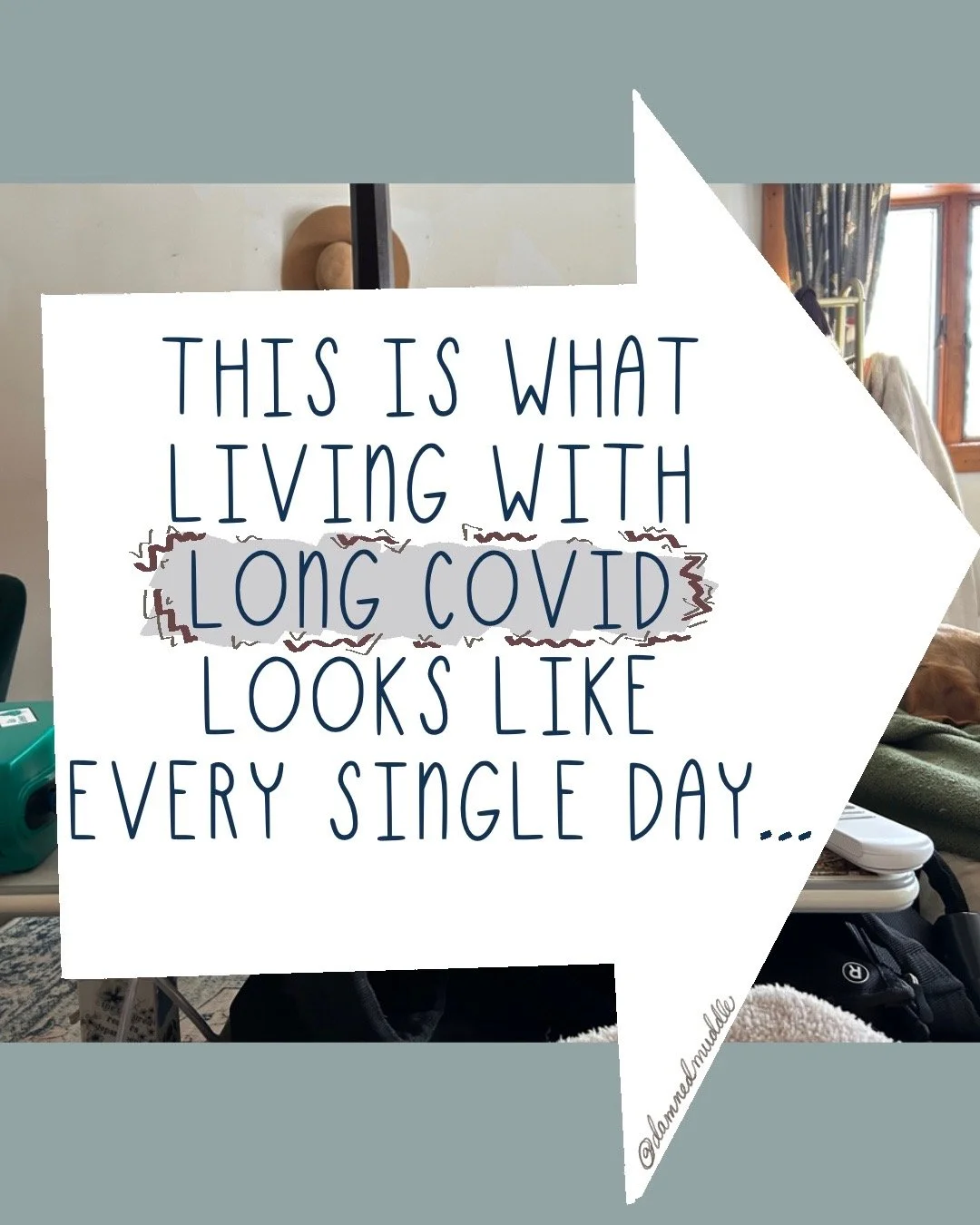
Picture of a bedroom scene covered with a large, white, illustrated arrow with hand lettering on it that reads, “This is what living with long covid looks like every single day.”
Some of you have been following along over the past year as I have pursued diagnosis for the disabilities that have grown drastically worse since 2021. I still have some upcoming appointments to sort things out, but so far I’ve been diagnosed with Long Covid (manifesting as small airway disease, chronic inflammation, chronic fatigue, and dead brain tissue-perhaps due to stroke) and ME/CFS.
I am still pursuing answers and treatment options, including a long covid clinic at the University of Michigan. In the meantime, I have a mish mash of treatments and tools, some prescribed, some discovered to try to deal with the daily symptoms and give me as much ability and quality of life as can be managed with these illnesses (both of which drastically reduce quality of life with many patients reporting it worse than cancer).
If I don’t do all of these every single day, I suffer more. Unfortunately, doing them all takes an immense amount of time and energy, often requiring help and leaving few resources to do anything else. Currently the list of treatments I try to do every day in order to feel ok/regain some ability consists of:
Nebulizer twice a day (seems to help with shortness of breath and stamina)
Compression boots for at least 30 minutes a day (helps with blood pooling, nerve, muscle, and joint pain)
Red light therapy (helps with pain in specific areas and just generally feels nice)
Back stretch mat for at least 20 minutes (helps with back, joint, and muscle pain)
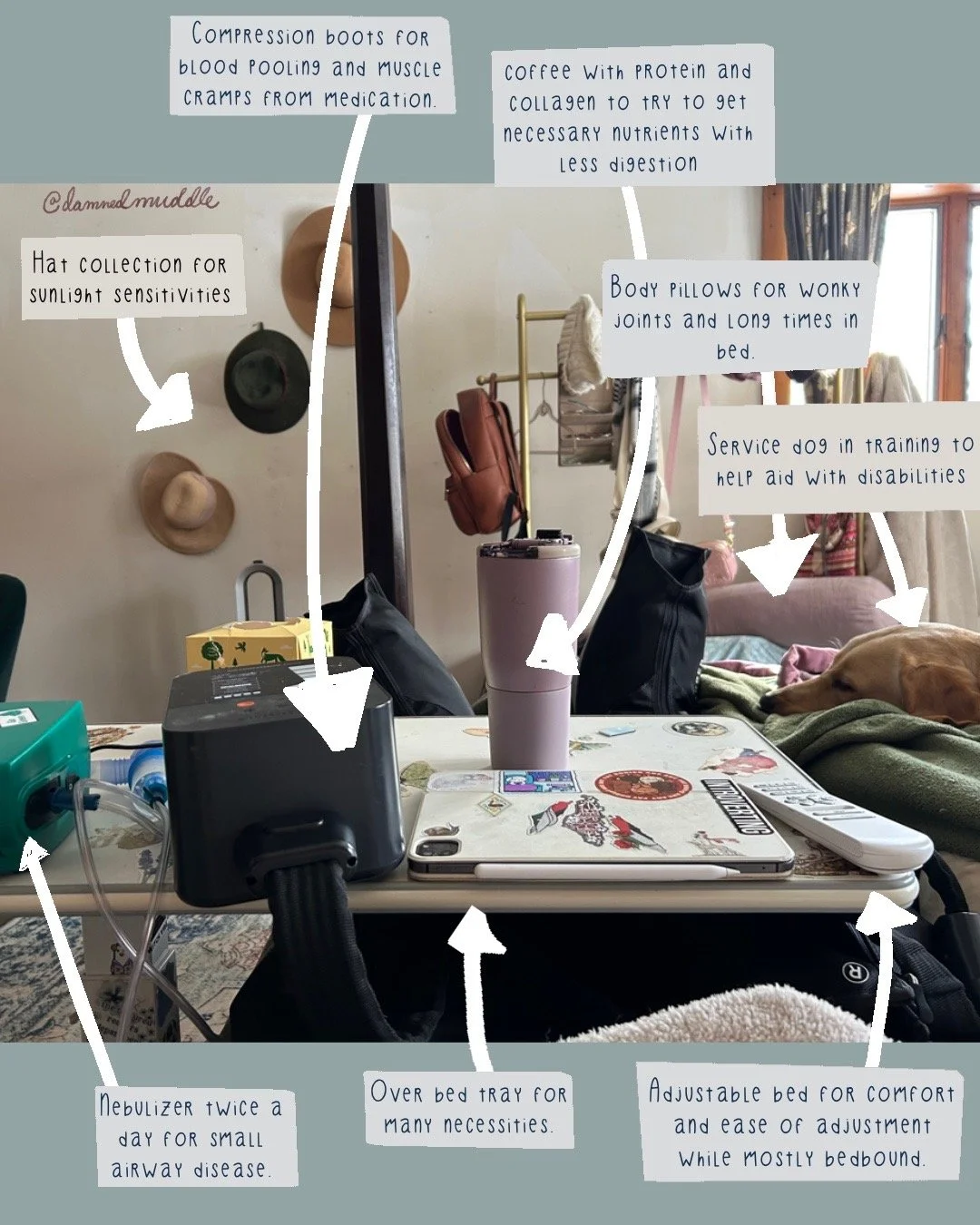
Picture of a bedroom scene with arrows and boxes drawn on it explaining things in the scene as follows: “Hat collection for sunlight sensitivities.” “Compression boots for blood pooling and muscle cramps from medication.” “Coffee with collagen and protein to try to get more nutrients with less digestion.” “Body pillows for wonky joints and long periods in bed.” “Service dog in training to help aid with disabilities.” “Nebulizer twice a day for small airway disease” “Over bed tray for many necessities” “Adjustable bed for comfort and ease of adjustment while mostly bedbound.”
And that doesn’t include all of the daily medications, supplements, and tools I use (like the over the bed tray and body pillows) to hopefully make life better.
Living with a chronic illness is overwhelming and exhausting when we are already overwhelmed and exhausted. I value simplicity & ease and I miss them both dearly.